



.webp)












Help our experts understand you better by filling our 2-Minute Form, to find the right education loan
Get instant loan offer suitable to your profile !

On this Page:
Most pilot training loans in India stop at CPL, leaving a ₹15-25 lakh type rating gap that families discover too late. Here is what lenders actually fund, what they quietly exclude, and how to plan your education loan for pilot training without an EMI-vs-unemployment overlap.

Quick Summary:
| What Students Usually Assume | The Reality in 2026 |
|---|---|
|
A ₹1.5 Cr loan covers the full pilot journey |
Loans stop at CPL. Type rating (₹15-25L) is treated as a separate funding event |
|
All DGCA-approved academies get equal lender treatment |
Lenders quietly tier academies based on past student outcomes |
|
Co-applicant income is the main approval filter |
Academy reputation and Class 1 medical status often weigh just as heavily |
|
Collateral-free pilot training loans India are easily available |
NBFCs cap most unsecured pilot loans at ₹50-75L. Above that, collateral is non-negotiable |
|
The moratorium covers all training years |
Most moratoriums end with CPL, not type rating, leaving a dangerous unemployment-EMI overlap |
|
DGCA exam attempts have no financial impact |
Multiple exam attempts can stretch the course beyond the moratorium window |
Most aspiring pilots in India walk into a lender's office with one number in their head: ₹1.5 crore. That is the maximum education loan for pilot training advertised by most banks and NBFCs. The assumption is that this number covers the full distance from a high school passout to an airline cockpit.
It does not.
There is a quiet ₹15-25 lakh gap between the day a student gets a Commercial Pilot License (CPL) and the day an airline hires them. That gap is type rating. Almost no standard loan sanction in India is structured to cover it, and most students discover this only after their CPL moratorium ends, EMIs begin, and the airline hiring offer is still conditional on a type rating they cannot afford.
This blog unpacks that gap and the other lender behaviors that quietly shape pilot training loans in India.


A CPL gets you a license. It does not get you a job at IndiGo, Air India, Akasa, or SpiceJet.
To fly commercially for any Indian airline, you need a type rating on the specific aircraft you will operate. For the Airbus A320 or Boeing 737, the two workhorse aircraft in Indian skies, type rating costs in India typically run between ₹15 lakh and ₹25 lakh. Outside India, the same training at European or Middle Eastern simulator centers can cross ₹30 lakh once accommodation and licensing fees are included.
Here is what makes this a structural problem and not just a budgeting oversight: most lenders sanction your student loan for pilot training in India against the CPL program cost estimate submitted by your academy. The disbursement schedule, the moratorium, and the EMI start date are all engineered around your CPL completion.
Type rating is treated as a separate course. Getting it funded usually requires:

By the time most students realize this, the original moratorium is winding down. EMIs are about to begin. The airline offer letter, if any, is conditional on type rating completion. The result is that families either delay the type rating (which means delaying employment) or take expensive personal debt to bridge the gap.
A pattern that surfaces repeatedly in GyanDhan's loan advisory conversations: a meaningful share of CPL holders in India remain unemployed not because airlines are not hiring, but because they cannot afford the type rating that converts the license into employment. The CPL becomes a stranded asset, paid for but not yet income-generating. Families who planned the loan around tuition and flying hours often did not plan for the 6 to 18 month window between license issuance and first airline paycheck, and that is precisely the window when the moratorium ends and EMIs begin.
A CPL is a license, not a degree. This single distinction explains most of the friction students face while applying for an education loan for pilot training in India.
The Directorate General of Civil Aviation issues CPLs under the Civil Aviation Requirements, specifically Section 7 Series B, which lays down the 200 flying hours requirement, Class 1 medical certification, RTR (Aero) requirement, and theoretical knowledge examination structure. The full framework is publicly available on the DGCA portal at dgca.gov.in.
What this means for the lender is that the asset being funded (the license) has a value that depends on a chain of conditional events:
For an MBA or engineering loan, the underlying employability curve is broader and more predictable. For pilot training, the curve is narrower and conditional at multiple points. This is why lenders apply tighter filters, slower processing, and higher scrutiny on loans for pilot training.
A realistic budget for CPL training at a DGCA-approved Flying Training Organisation in India looks like this:
| Cost Component | Typical Range |
|---|---|
|
Tuition and ground school |
₹15-20 lakh |
|
Flying hours (200 hours, DGCA mandated minimum) |
₹15-22 lakh |
|
Simulator sessions |
₹2-4 lakh |
|
Accommodation and living |
₹3-6 lakh |
|
DGCA exam fees and attempts |
₹50,000-1.5 lakh |
|
Class 1 medical and renewals |
₹15,000-30,000 |
|
Books, uniforms, miscellaneous |
₹50,000-1 lakh |
|
CPL completion total |
₹35-50 lakh |
|
Type rating (A320 or B737) post-CPL |
₹15-25 lakh |
|
Total |
₹55-75 lakh |
Note: Cost ranges in the table above are compiled from publicly available fee structures of major DGCA-approved Flying Training Organisations including IGRUA, NFTI, and Bombay Flying Club, cross-referenced with GyanDhan's loan disbursement records across pilot training programs. Actual costs vary by batch, aircraft availability, and DGCA exam attempts.
DGCA publishes the official list of approved Flying Training Organisations on its portal. Choosing a DGCA-approved academy is non-negotiable for pilot training loans because lenders will rarely fund unrecognised institutes.
The academies most students consider include Indira Gandhi Rashtriya Uran Akademi (IGRUA, Rae Bareli), National Flying Training Institute (NFTI, Gondia), Bombay Flying Club, Flytech Aviation Academy (Hyderabad), and Government Flying Training School (Bengaluru), among others. Costs at these academies vary by aircraft fleet, instructor availability, and waiting periods, all of which can extend training time and increase total cost.
For students considering training in the United States, United Kingdom, Canada, Australia, or New Zealand, the advertised academy fee is almost always misleading because it excludes:
CAE Oxford's integrated ATPL program in the UK regularly crosses ₹1 crore once accommodation and personal expenses are factored in. Aviation programs at Western Michigan University and Embry-Riddle in the United States, when combined with international student living costs, routinely reach ₹70-95 lakh. Australian and New Zealand programs sit slightly lower but still demand ₹45-70 lakh in realistic total spend.
This is why pilot training loans India for overseas training are almost always secured loans. Lenders are not willing to underwrite ₹70 lakh-plus unsecured exposure against a license whose final value depends on DGCA conversion and a separate type rating.
Beyond the standard co-applicant income and CIBIL score check, lenders quietly evaluate factors that rarely appear in any application brochure:
Academy track record. Lenders maintain informal scoring of academies based on past students' completion rates, DGCA exam pass rates, and post-CPL employability. Two DGCA-approved academies with similar fees can have meaningfully different approval probabilities.
Co-applicant profile depth. Many students assume salaried co-applicants are automatically preferred. Several NBFCs now prioritize income consistency over employment type, which is why some self-employed parents with stable ITRs over three years get faster approvals than salaried applicants with fluctuating liabilities or recent job changes.
Class 1 medical status. Some lenders ask for proof of Class 1 medical clearance before disbursement. A pending medical can stall the loan even after sanction.
Course structure. Integrated ATPL programs are often viewed more favorably than modular CPL-only programs because they signal commitment and reduce dropout risk.
Collateral coverage. For secured education loans for pilot training, most lenders require collateral worth 1.33 times the loan amount. This means a ₹75 lakh loan needs roughly ₹1 crore in pledgeable assets, which most middle-class families don't realize until late in the process.
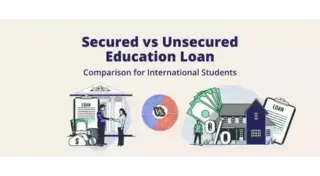
| Feature | Secured Loan | Unsecured Loan |
|---|---|---|
|
Collateral |
Required (property, FD, insurance, non-agri land) |
Not required |
|
Typical loan ceiling |
₹1.5 Cr and above |
₹50-75 lakh |
|
Generally lower, starting around 9.5% |
Generally higher, often 11-14% |
|
|
Approval driver |
Collateral value + co-applicant |
Co-applicant income + academy |
|
Processing time |
Longer (3-6 weeks typical) |
Faster (1-3 weeks typical) |
|
Best for |
Overseas training, integrated ATPL |
Domestic CPL at recognised academies |
Public-sector banks like Bank of Baroda dominate the secured segment for pilot training loans because of lower rates and longer tenure (up to 15 years). NBFCs like Avanse, Credila, Auxilo, and Tata Capital dominate the unsecured segment but cap loan amounts and price the risk higher.
Two government channels are worth knowing about, and one that students often overestimate.
A pattern that has emerged among aspiring pilots managing the high cost of CPL plus type rating is the blended loan structure: a secured loan for the bulk of CPL training, combined with an unsecured loan for living and ancillary costs, with type rating kept as a planned second-stage loan.
The logic is simple. Secured loans give you the largest ticket size at the lowest rate, but they consume collateral and take longer to process. Unsecured loans give flexibility and speed but at higher cost. Splitting the borrowing lets families ringfence collateral, preserve some unsecured borrowing capacity for the post-CPL type rating, and stagger EMIs more sensibly.
This is not advertised as a strategy by any lender, but loan advisors who handle a high volume of aviation cases tend to recommend it for total budgets above ₹60 lakh.
Before signing any student loan for pilot training in India, the following should be answered in writing, not assumed:
If three or more of these answers are unclear, the loan is not ready to be signed.
The Indian aviation industry is genuinely expanding. IndiGo's 2023 order of 500 Airbus A320 family aircraft and Air India's 470-aircraft order across Airbus and Boeing remain among the largest commercial aircraft orders ever placed globally. The Ministry of Civil Aviation has separately emphasized airport and fleet capacity expansion under the UDAN scheme and broader sectoral policy, available at civilaviation.gov.in. The demand side for pilots is, in this sense, not speculative.Secured
But the gap between holding a CPL and being employable in this expansion is the type rating, and the gap between affording a CPL and affording a type rating is what catches most families off guard. An education loan for pilot training is a powerful tool. It becomes a trap only when families plan for the loan without planning for the ₹15-25 lakh that comes after it.
If you are evaluating loan options for a CPL program in India or abroad, the right starting question is not what is the maximum I can borrow, but what is my total realistic cost to airline-ready, and how do I structure the borrowing to bridge that without an EMI-vs-unemployment overlap.
The cleanest way to answer that question is to first see what you actually qualify for, across secured and unsecured lenders, before locking into any single academy or loan product. GyanDhan's eligibility check pulls offers from multiple banks and NBFCs in one place, factors in your co-applicant profile, and flags realistic loan ceilings before you commit. Check your loan eligibility here and start with the numbers, not the assumptions.

Most standard loan sanctions in India are structured around CPL course cost and exclude type rating as a separate funding event. Some lenders offer top-ups against existing collateral, but this requires fresh underwriting and is not guaranteed. Before signing, ask your lender to confirm type rating coverage in writing. The verbal assurance at branch level often does not survive credit team scrutiny later.
When the original loan was secured against unencumbered collateral, top-ups can be processed in 3-6 weeks if all academic and licensing documents are in order. When the original loan was unsecured, a top-up is effectively a fresh application and is evaluated against current co-applicant income, post-CPL employability outlook, and any EMIs that have already started. This is the operational reason advisors recommend planning the type rating loan as a separate second-stage event rather than assuming top-up convenience.
This is one of the most under-discussed risks in pilot training loans. A Class 1 medical downgrade or revocation does not automatically pause your loan. Repayment obligations continue based on the original moratorium schedule. Some lenders allow restructuring on a case-by-case basis, but it is not a contractual right. This is why advisors recommend confirming Class 1 medical clearance before disbursement rather than after.
Generally harder. A CPL is a license tied to multiple conditional outcomes including DGCA theoretical exams, 200 flying hours, Class 1 medical validity, and post-CPL type rating. Lenders apply tighter filters than they would for a structured MBA or engineering program because the employability curve is narrower and more fragile.
Check Your Education Loan Eligibility

Ask from a community of 10K+ peers, alumni and experts
Many people aspire to be commercial pilots, but the costs of commercial pilot training can be prohibitively expensive. A pilot training program generally costs between INR 30 Lakh to INR 50 Lakh annually, depending on…
1 reply from the GD Connect community · last active almost 2 years ago
Trending Blogs
Similar Blogs

Network with a community of curious students, just like you
Join our community to make connections, find answers and future roommates..Country-Wise Loans
Best Lenders for Education Loan

ICICI Bank

Axis Bank

Union Bank

Prodigy

Auxilo

Credila

IDFC

InCred

MPower

Avanse

SBI

BOB

Poonawalla
Saraswat