


.webp)


















Help our experts understand you better by filling our 2-Minute Form, to find the right education loan
Get instant loan offer suitable to your profile !

On this Page:
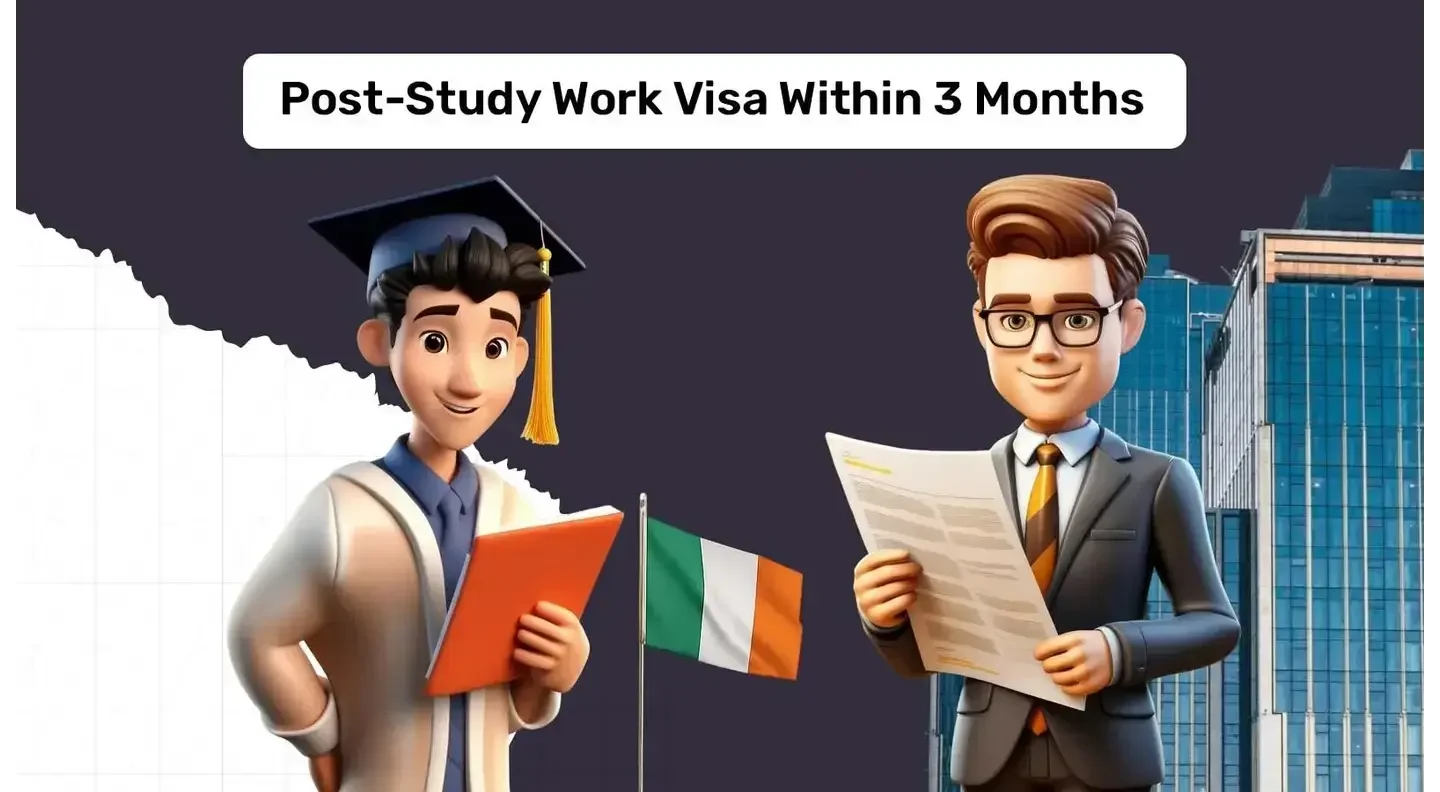
How an Indian student secured a high-paying job in Ireland within 3 months of graduation and turned study abroad into a strong career ROI.

When Indian students consider studying abroad, the real question is rarely about the degree alone. What matters more is what comes next. Job prospects, visa timelines, and whether the investment actually pays off. This is where post-study work visa success in Ireland for Indian students comes in as a determining factor for those who have a careful look at the return on investment.
Priya’s journey stands out for a simple reason. She earned a master's in Data Analytics at a university in Dublin, which is directly related to the hiring requirements in Ireland. Three months after graduation, she had a highly paid job in her major, transforming a well-planned postgraduate degree into a tangible career product. She was successful because she did her research on the post-study work system in Ireland and timed her job-seeking.
More importantly, it breaks down what her experience reveals about career growth, salary potential, and the availability of high-paying jobs in Ireland for Indian graduates who plan their transition strategically.

Ireland has been gradually becoming a nation where education and employment performance correlate in a more direct way than in most of the other countries in the study destinations. One of the major strengths is the post-study work visa pathway: the students with a Level 9 qualification (e.g., a master's in Data Analytics) will have a chance to remain in Ireland up to 24 months to look for a job, which will provide them with a significant runway to find a job and plan their career. This plays a crucial role in the Ireland student visa to work visa process, especially for international graduates who need time to transition into the workforce.
In terms of the labour market, the Irish economy is dynamic and more technology-driven. Overall employment levels are high, and above 2.8 million individuals are actively involved in the Irish labour market, indicating consistent prospects for skilled degree graduates. According to government and international reports, the areas of ICT, data analytics, and digital services are regularly experiencing talent demand, which directly impacts graduates joining those areas.
Moreover, Ireland has been receiving a lot of foreign investment, especially in technology and innovation. Recent inward investment commitments have focused on creating thousands of new roles, many of them in technical and data-focused positions. This trend strengthens the availability of high-paying jobs in Ireland for Indian graduates, especially those with specialised postgraduate training. Together, these factors explain why Ireland functions not just as a study destination, but as a practical launchpad for long-term career growth and financial return.

Like many Indian students pursuing a high-ROI postgraduate degree abroad, Priya did not fund her education entirely out of pocket. She took an education loan before starting her master’s, fully aware that repayment pressure would follow soon after graduation. The education loan ROI in Ireland has been a major concern since the very day, because of tuition fees, living costs in Dublin, and accrued interest. A well-paying and timely job was not optional to the degree that it made financial sense.
Risk-wise, it was apparent all along.

The education loan itself was not the issue that made this phase stressful, but rather the timing. A delayed job search would have implied depending on family support or savings. Her early securing of a position reduced the time required by Priya to recover financially and strengthened the argument of why career outcomes are as important as educational credentials in studying overseas.
After Priya entered the post-study work visa in Ireland, her priorities changed to employability, rather than academic performance. The move was strategic and time-limited, with the realization that the PSWV window is limited, and that results within this period directly influence long-term career and post-study work visa success in Ireland for Indian students.
One of the initial steps started in the course itself. Instead of waiting to graduate, Priya took the initiative to network when the university held career events and alumni meetings, and industrial get-togethers in Dublin. Such contacts have made her appreciate the workings of the local employment business as well as what employers require of international graduates, and hence her job search has been more focused when the visa clock actually began.
She was also selective in her applications. She did not make a wide-ranging application but targeted businesses that already operate in Ireland and traditionally hire international talent, such as Google, Microsoft, and Intel. This strategy facilitated better response rates and oriented her activities towards the roles that had higher chances of being converted into stable employment after the PSWV phase.
Equally important was how she positioned herself on paper. Priya has tailored her CV to suit the Irish market, making it brief, results-oriented, as opposed to describing her education, and prioritizing practical skills over academic ones. Measurable impact, tools applied, and project outcomes were prioritised, which played a significant role in the shortlisting. Combined, these steps transformed the Ireland post-study work visa job search from a passive wait into a structured campaign with outcomes.
The work done by Priya during the post-study work phase bore a tangible result in three months after her graduation. She was able to get a full-time job in a data-focused position that was very related to her master's specialisation and the demand to hire in Ireland. The position was accompanied by a competitive wage in terms of the Irish graduate, which was enough to substitute uncertainty with certainty.
The shift was immediate. Stable income provided Priya with an opportunity to start a planned process of debt repayment on education loans rather than delaying it. Payment every month turned out to be manageable, savings remained, and financial planning became predictable.
Her outcome also reinforces practical Ireland post-study work visa job search tips that matter in real situations. Early preparation, selective applications, and role alignment do more than land interviews. They shorten the time between graduation and financial independence, turning a job offer into a measurable return on investment.
For Indian students entering the post-study work phase, outcomes depend far less on luck and far more on preparation. Based on Priya’s experience, these Ireland post-study work visa job search tips focus on practical steps that directly improve employability and shorten the time between graduation and a full-time offer.
Focus on the jobs with long-lasting demand in Ireland, especially in technology, data, and digital services. When your profile is a clear fit to local skills gaps, the employers react more.
The visibility is enhanced by networking via alumni, university events, and industry meetups. A significant number of PSWV job openings are reached via referrals and not only job portals.
Make it short, results-oriented, and role-specific. Recruiters in Ireland prefer practical deliverables, equipment deployed, and quantifiable differences to scholarly information.
Target firms that are used to recruiting overseas graduates and assisting with the work visa. The targeted strategy enhances the response rates and increases the post-study work visa success in Ireland amongst Indian students.
Your end of the final semester should be used to find target positions, visit career fairs, and meet with recruiters. This can be achieved through early preparation, which will ease the transition of the student status to the post-study work visa period.
One thing is put into perspective after Priya goes through with it. Studying in Ireland is worth it in case a person not only plans their career but also continues it far after leaving the classroom. Making a postgraduate decision that best fits the market, being aware of the post work window, and responding promptly after achieving her graduation helped her transform education into an income stream sooner than most other students anticipate.
For Indian students, the takeaway is simple. The success of the post-study work visa in Ireland does not revolve around securing a visa extension. It has a direct impact on how fast you begin to earn, how comfortably you are able to cover your education loan, and how fast your investment in studying abroad begins to pay off.
Plan your ROI by calculating your potential salary and loan repayment schedule before making a final decision. Tools and guidance from GyanDhan can help you do this completely free, with support from experienced experts who break down numbers realistically. Having this clarity upfront makes it easier to judge whether your study abroad plan aligns with your long-term financial goals.

If you complete an eligible degree in Ireland, you can stay back under the post-study work option to look for a job. For master’s graduates, this period can go up to two years, which gives you enough time to enter the job market and secure full-time employment.
Ireland generally has a strong approval rate for genuine Indian student applicants, especially when admission, finances, and documentation are in order. Clear academic intent and proper financial planning play a major role in visa approval.
Yes. Upon graduation, students are able to work full-time in their post-study work. You can then later move to a longer-term work permit once you are in an appropriate position and with the right salary.
Some students do return home due to personal reasons, job preferences, or visa timelines. However, a significant number choose to stay back if they secure employment during the post-study work phase, especially in high-demand fields like technology, data, and business analytics.
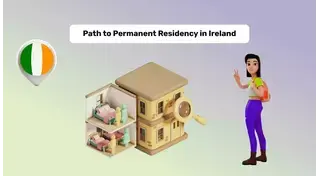
Ireland does not provide immediate permanent residency upon the studies. Nonetheless, Indian graduates with work experience, who work over a certain period, may qualify to apply for long-term residence, which works in the same way as PR, over time. You can check the latest eligibility details directly on the Irish Immigration Service website.
Check Your Education Loan Eligibility

Ask from a community of 10K+ peers, alumni and experts
Be the first to discuss this article
Ask a question or share your experience with students on GD Connect.
Add Your ResponseTrending Blogs
Similar Blogs

Network with a community of curious students, just like you
Join our community to make connections, find answers and future roommates..Country-Wise Loans
Best Lenders for Education Loan

ICICI Bank

Axis Bank

Union Bank

Prodigy

Auxilo

Credila

IDFC

InCred

MPower

Avanse

SBI

BOB
Poonawalla
Saraswat